- Introduction
- Why Partner Choice Matters
- 1. Review Portfolio
- 2. Evaluate Technical Expertise
- 3. Understand Workflow
- 4. Ask About Deliverables
- 5. Consider Scalability
- 6. Communication & Collaboration
- 7. Asset Reusability
- Common Mistakes to Avoid
- Why Avenzo Nexus
- Frequently Asked Questions
- Final Thoughts
Introduction
As businesses increasingly adopt 3D product visualization, choosing the right service provider has become an important decision. Whether you need photorealistic product renders, interactive 3D viewers, product configurators, WebAR experiences, or marketing animations, the quality of the final result depends not only on the technology but also on the expertise behind it.
With many agencies and freelancers offering similar services, it can be difficult to know which partner best fits your project.
This guide outlines the key factors to consider when selecting a 3D product visualization partner, helping you make an informed decision and set your project up for success.
Why Choosing the Right Partner Matters
A professionally created 3D asset is more than just a marketing image. It can become the foundation for product renders, animations, interactive viewers, configurators, AR experiences, and future marketing campaigns.
Choosing an experienced partner can help you:
- Achieve consistent visual quality
- Reduce unnecessary revisions
- Meet project deadlines
- Reuse digital assets across multiple platforms
- Build a scalable visualization workflow
1. Review Their Portfolio
A portfolio provides valuable insight into a company's capabilities.
Look for:
- Photorealistic materials
- Accurate lighting
- Clean modeling
- Attention to detail
- Product diversity
- Consistent image quality
Ask yourself:
- Does the work look realistic?
- Would these visuals represent my brand well?
- Have they worked with products similar to mine?
2. Evaluate Their Technical Expertise
Modern product visualization extends beyond still images.
An experienced partner may also offer:
- Photorealistic rendering
- 3D product animation
- Interactive product viewers
- Product configurators
- WebAR experiences
- Optimization for websites and e-commerce
Working with a team that understands multiple technologies can make future expansion easier.
3. Understand Their Workflow
Every project should follow a clear production process.
Typical stages include:
- Project discussion
- Reference collection
- 3D modeling
- Material creation
- Review and feedback
- Rendering or publishing
- Final delivery
A transparent workflow helps both parties stay aligned throughout the project.
4. Ask About Deliverables
Before starting a project, clarify exactly what you'll receive.
Deliverables may include:
- High-resolution rendered images
- 3D models
- Interactive viewers
- GLB files
- USDZ files
- Animation videos
- WebAR-ready assets
Knowing the deliverables in advance helps avoid misunderstandings later.
5. Consider Scalability
Your first project may involve a single product, but future requirements could include an entire product catalog.
Choose a partner capable of supporting:
- Large product collections
- Product variants
- Configurable products
- Interactive experiences
- Long-term collaboration
Scalability becomes increasingly important as your business grows.
6. Communication and Collaboration
Successful projects rely on clear communication.
Look for a partner who:
- Responds promptly
- Explains technical concepts clearly
- Welcomes feedback
- Provides realistic timelines
- Keeps you informed throughout production
Good communication often leads to smoother projects and better outcomes.
7. Ask About Asset Reusability
A professionally created 3D model can often be reused across multiple marketing channels.
For example, the same digital asset may support:
- Product renders
- Marketing videos
- Interactive viewers
- Product configurators
- WebAR experiences
- Product presentations
Reusing assets can help maintain visual consistency while reducing duplication of work.
Common Mistakes to Avoid
When choosing a 3D visualization partner, avoid making decisions based solely on price.
Other factors to consider include:
- Portfolio quality
- Technical capabilities
- Communication
- Experience with similar products
- Long-term support
- Delivery timelines
Selecting a partner based on overall value rather than cost alone often leads to better project outcomes.
Why Businesses Work with Avenzo Nexus
At Avenzo Nexus, we provide end-to-end 3D product visualization services, helping businesses transform product concepts into engaging digital experiences.
Our services include:
- Photorealistic 3D rendering
- Product modeling
- Interactive 3D product viewers
- Product configurators
- WebAR experiences
- Product animations
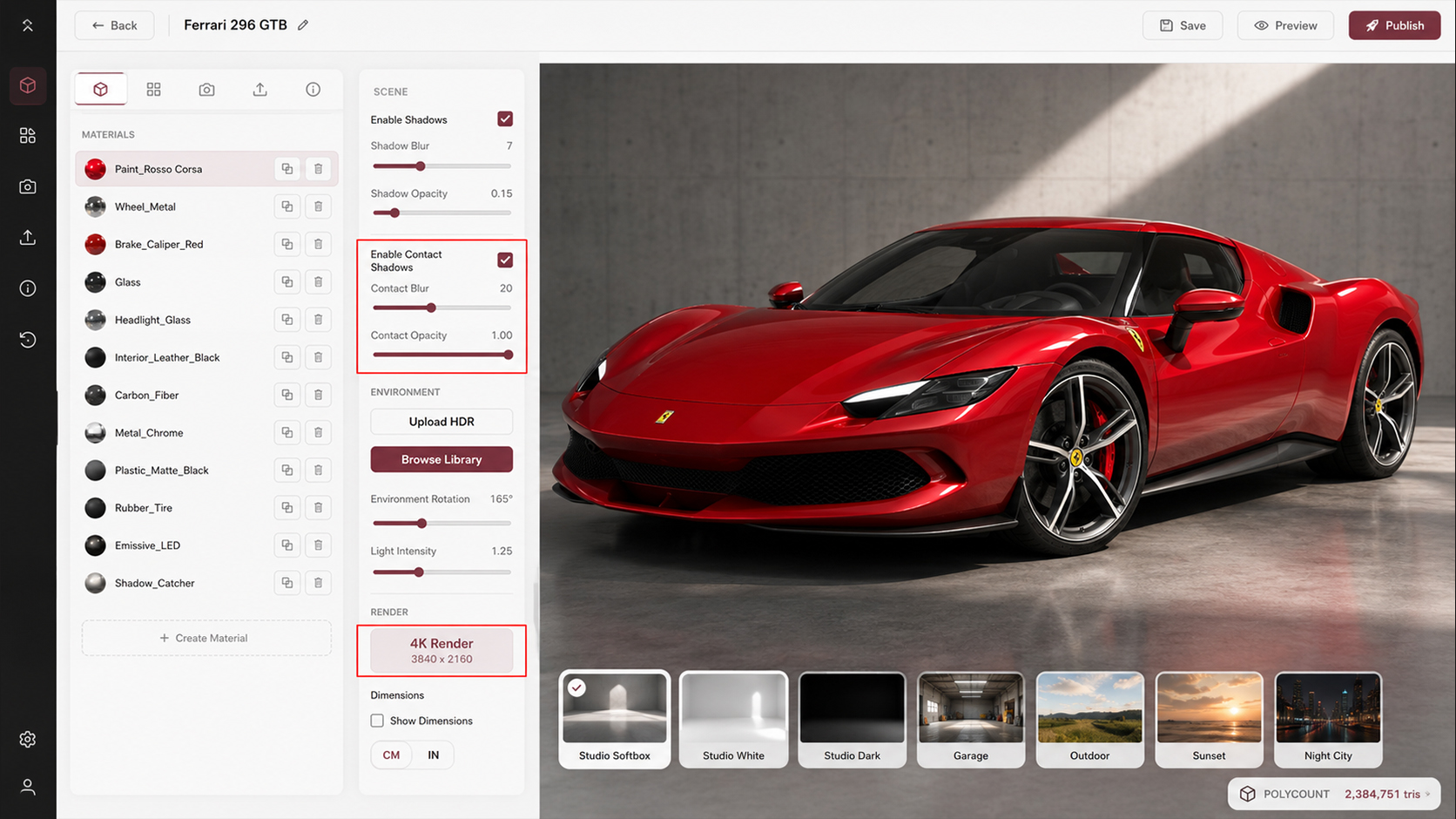
In addition to visualization services, we've developed the Avenzo Nexus Platform, enabling businesses to publish interactive product experiences through a centralized cloud-based workflow that supports viewers, configurators, and WebAR.
Our goal is to help businesses present products with clarity, realism, and interactivity while supporting modern e-commerce and digital marketing strategies.
Frequently Asked Questions
Should I hire a freelancer or an agency?
The right choice depends on your project's size, complexity, timeline, and long-term needs. Smaller projects may suit a freelancer, while larger or ongoing projects may benefit from an agency or specialized studio.
Can one 3D model be used for multiple purposes?
Yes. A well-prepared 3D model can often be reused for renders, animations, interactive viewers, configurators, and WebAR experiences.
What industries benefit from professional 3D visualization?
Furniture, consumer electronics, medical devices, industrial products, automotive, cosmetics, jewelry, and many other industries use 3D visualization to enhance product presentation.
Can I start with just one product?
Absolutely. Many businesses begin with a single product before expanding to additional items or a full product catalog.
Final Thoughts
Selecting the right 3D product visualization partner is an investment in your brand's digital presence. By evaluating experience, technical expertise, communication, workflow, and scalability, businesses can choose a partner capable of delivering high-quality assets that continue to provide value across multiple marketing channels.
A thoughtful decision today can support product launches, e-commerce growth, and future interactive experiences for years to come.