Introduction
High-quality product visuals are no longer optional in today's e-commerce market—they're one of the biggest factors influencing whether a customer decides to buy. Whether you're selling on Amazon, Shopify, Etsy, or your own online store, the way your products are presented directly affects customer trust, engagement, and conversions.
For years, traditional product photography has been the standard choice for showcasing products. Professional cameras, studio lighting, and skilled photographers have helped brands create compelling product images that build confidence and communicate quality.
Today, however, many businesses are also turning to 3D product rendering as part of their visual content strategy. Using advanced 3D modeling and rendering software, brands can create photorealistic images, animations, and interactive product experiences without relying solely on physical photoshoots.
This shift raises an important question: Which approach is the better investment—traditional product photography or 3D product rendering?
The answer isn't as simple as declaring one method superior to the other. Both have strengths, limitations, and ideal use cases. The right choice depends on factors such as your product type, budget, marketing goals, production timeline, and the variety of content you need.
In this guide, we'll compare both approaches in detail, exploring their workflows, costs, flexibility, scalability, and long-term value. By the end, you'll have a clearer understanding of which solution best aligns with your business needs—and whether a combination of both might deliver the best results.
What Is Traditional Product Photography?
Traditional product photography is the process of capturing real products using professional cameras, lighting equipment, lenses, and studio environments. The objective is to create high-quality images that accurately represent the product while highlighting its design, materials, colors, and important features.
A typical product photography workflow includes:
- Preparing the physical product
- Setting up lighting and backgrounds
- Positioning cameras and lenses
- Capturing images from multiple angles
- Editing and retouching photographs
- Exporting optimized images for websites, marketplaces, and marketing materials
Professional product photography remains an excellent choice for many businesses because it showcases the actual physical product that customers will receive. Well-executed photographs can communicate authenticity, craftsmanship, and premium quality.
It is commonly used for:
- Fashion and apparel
- Food and beverages
- Handmade products
- Cosmetics
- Jewelry
- Furniture
- Consumer electronics
- Product catalogs
- Social media campaigns
However, creating professional product photography often involves coordinating physical products, studio time, specialized equipment, and post-production work. As product catalogs grow or designs change frequently, maintaining consistent imagery can become more complex and resource-intensive.
What Is 3D Product Rendering?
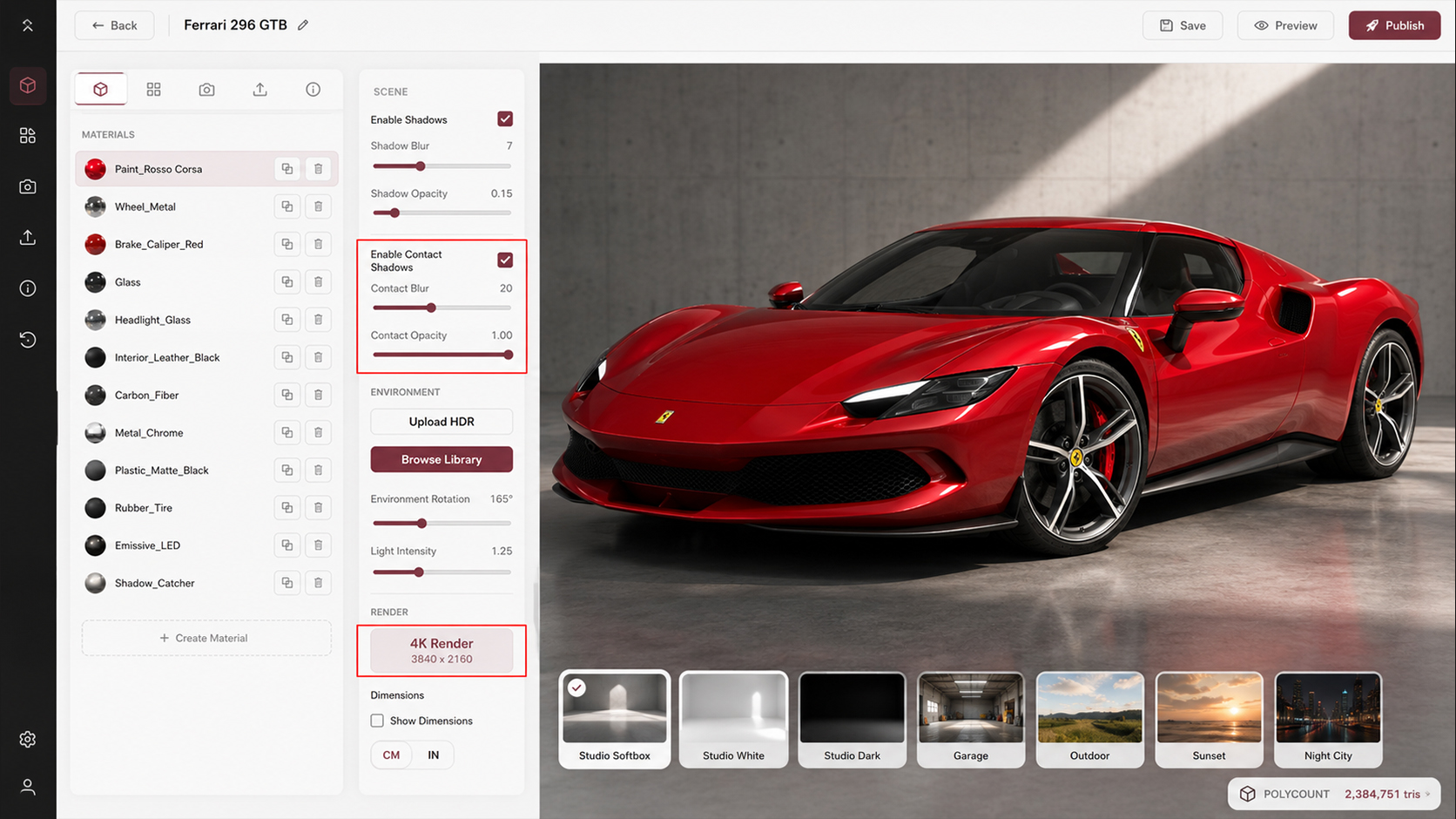
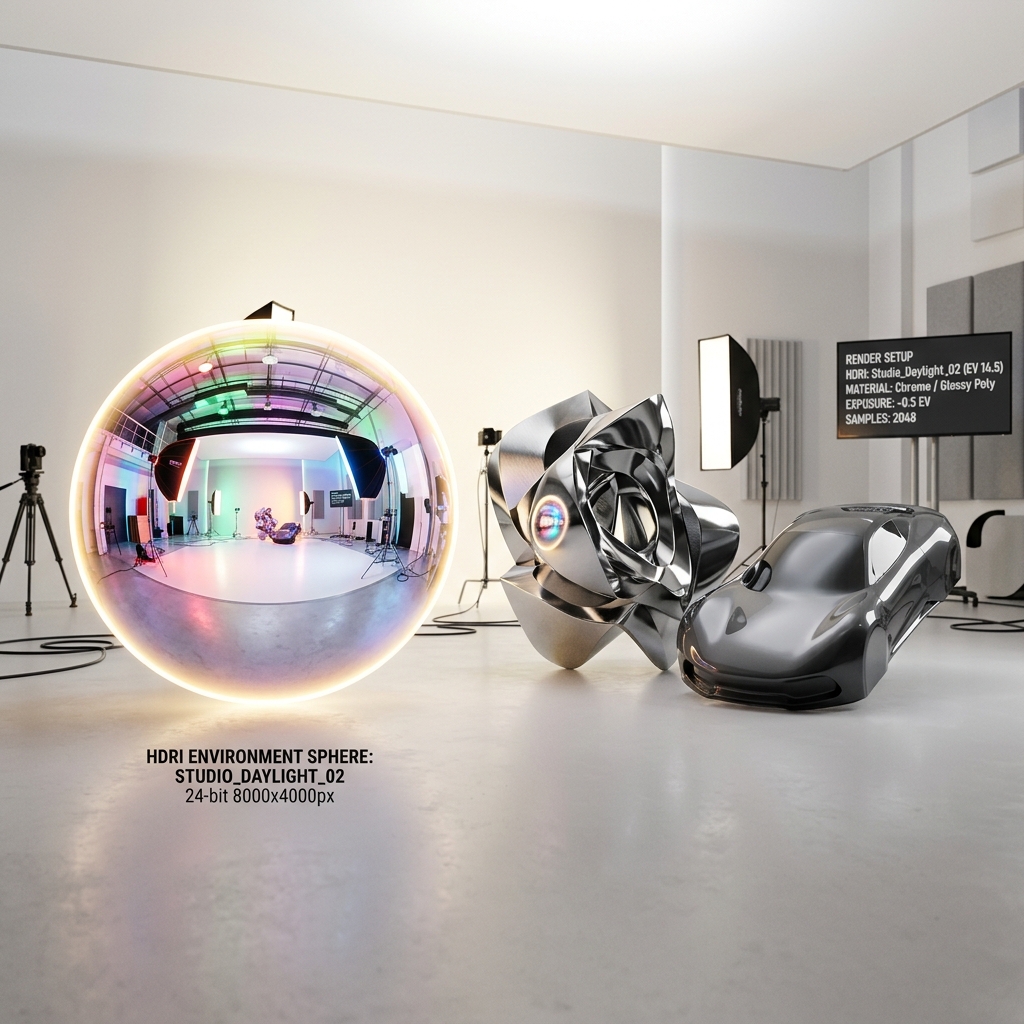
3D product rendering is the process of creating realistic digital representations of products using specialized 3D software. Instead of photographing a physical object, artists build an accurate digital model, apply realistic materials and textures, set up virtual lighting, and generate high-resolution images or animations.
The typical workflow includes:
- Creating a precise 3D model
- Applying materials and textures
- Configuring realistic lighting
- Positioning virtual cameras
- Rendering photorealistic images
- Exporting visuals for different platforms
"Unlike traditional photography, 3D rendering allows businesses to create marketing assets before manufacturing is complete."
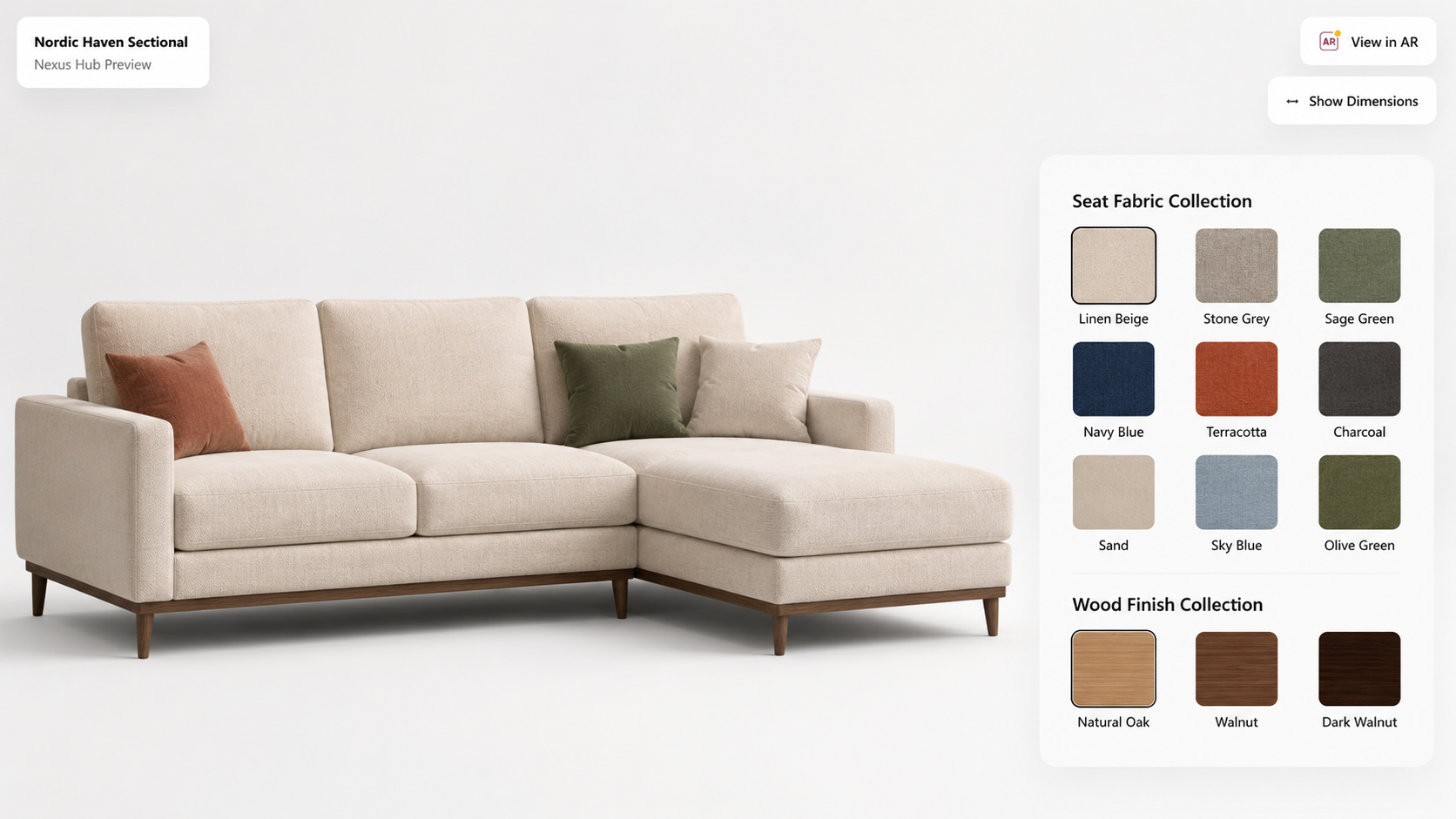
Once a product has been modeled, the same digital asset can be reused to produce product images, animations, 360° viewers, exploded views, and WebAR experiences.
This flexibility has made 3D rendering an increasingly popular option for industries such as furniture, consumer electronics, home décor, automotive components, industrial products, and luxury goods.